 Cutting Board
 Frying Pan Pro
 Double-Sided Board


A clean cutting board is essential for safe food preparation, but the right way to care for it depends on the material. In this guide, Titanium Wares will shows you how to clean a cutting board the right way, covering everyday washing, sanitizing after raw meat, and removing stains and odors from wood, plastic, bamboo, titanium, glass, and marble boards. Learn the right care routine for each material to keep your kitchen clean and safe.
In this article
Key Takeaways
- Clean your cutting board after every use: scrape, wash in hot soapy water, rinse well, and dry completely.
- Sanitize after raw meat, poultry, seafood, or eggs, using the USDA ratio of 1 tablespoon of bleach per gallon of water.
- Keep wood and bamboo out of the dishwasher and oil them with food-grade mineral oil about once a month.
- Use separate boards for raw proteins and ready-to-eat foods to reduce cross-contamination.
- Non-porous titanium boards like the Titanium Wares 100% Pure Titanium Cutting Board resist stains and odors and need only soap, water, and a towel, with no oiling.
Why Cleaning Your Cutting Board Properly Matters
A cutting board touches almost everything you prepare, from raw chicken to salad greens. That makes it an easy place for cross-contamination if residue is left behind. Food safety guidance from the USDA recommends washing cutting boards in hot, soapy water after each use and keeping separate boards for raw meat and ready-to-eat foods.
Good cleaning habits pay off in other ways too. Washing soon after use keeps stains and odors from garlic, onions, beets, and fish from setting in. Drying the board properly helps prevent warping and cracking in wood and bamboo. A few minutes of care after each meal keeps your board more hygienic, better looking, and in service longer.
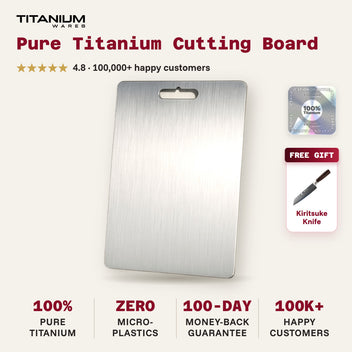
A pure titanium cutting board that never soaks up juices, stains or smells. Rinses clean or goes in the dis...
What You'll Need
-
Dish soap and hot water
-
A sponge or a stiff-bristled brush (a brush reaches into knife marks)
-
A bench scraper or the spine of a knife for clearing scraps
-
Coarse salt and a lemon, or baking soda, for stains and odors
-
A sanitizer unscented liquid chlorine bleach, white vinegar, or 3% hydrogen peroxide
-
Clean dish towels or paper towels
-
Food-grade mineral oil (wood and bamboo only)
If you use a titanium board, the list gets shorter: it needs only basic dishwashing supplies, rather than specialized oils or wood-conditioning products.
How to Clean a Cutting Board: Step by Step
This everyday routine works for most cutting boards. Material-specific tips follow later in the guide.
-
Scrape off food scraps: Use a bench scraper or the spine of your knife to push leftover bits into the trash or compost. Using the spine keeps your blade sharp.
-
Rinse with hot water: A quick rinse loosens stuck-on residue. Keep the water flow gentle after raw meat so juices don't splash onto the sink or nearby dishes.
-
Wash with hot, soapy water: Scrub both sides and the edges with a sponge or brush. Work along any knife marks, where small particles tend to collect.
-
Rinse thoroughly: Wash away all the soap so it doesn't leave a film or taste on your next meal.
-
Sanitize when needed: After cutting raw meat, poultry, seafood, or eggs, apply a sanitizer as described in the next section.
-
Dry completely: Towel dry the board, then stand it upright or set it on a rack so air reaches both sides. Avoid stacking or storing boards flat while they're still damp.
How to Disinfect a Cutting Board
Cleaning removes visible food and grease. Sanitizing reduces the number of germs on a surface to safer levels. Always clean the board first, because sanitizers work poorly on surfaces still coated in residue. Sanitizing matters most after raw meat, poultry, seafood, or eggs.
With White Vinegar
Spray or wipe undiluted white vinegar over the clean board, let it sit for a few minutes, then rinse and dry. Vinegar is useful for light freshening and odor control. However, it isn't a registered disinfectant and is less reliable than bleach against some harmful bacteria, so it's better suited to produce boards than to raw meat cleanup.
With Diluted Bleach (USDA Ratio)
The USDA recommends 1 tablespoon of unscented liquid chlorine bleach per gallon of water. Flood the board's surface with the solution and let it stand for several minutes. Rinse with clear water, then air dry or pat dry with clean paper towels. Mix a fresh batch each time, and never combine bleach with vinegar, ammonia, or other cleaners.
With Hydrogen Peroxide
Pour household 3% hydrogen peroxide over the clean board and spread it across the surface. Let it sit for several minutes, then rinse and dry. It leaves no lingering smell, which makes it a convenient routine option. Follow the product label for contact time, and note that it may slightly lighten some wood finishes.
Can the Dishwasher Sanitize a Cutting Board?
Yes, for boards labeled dishwasher-safe. Hot water and heated drying help reduce germs, and dishwashers certified to NSF/ANSI 184 have sanitize cycles designed for this purpose. Wood and bamboo should stay out, since heat and prolonged moisture can warp or crack them. For any board, follow the manufacturer's care instructions.
How to Clean a Cutting Board by Material
The basic wash is the same for every board, but drying, deep cleaning, and long-term care vary by material.
|
Material |
Everyday cleaning |
Dishwasher |
Ongoing care |
|
Wood |
Hand wash, dry promptly |
No |
Oil about once a month |
|
Bamboo |
Hand wash, dry upright |
No |
Oil occasionally |
|
Plastic |
Scrub knife grooves well |
Only if the manufacturer allows |
Replace when deeply grooved |
|
Titanium |
Soap, water, towel dry |
Yes, if labeled dishwasher-safe |
No oiling needed |
|
Glass |
Soap and water |
Often, if labeled safe |
Minimal |
|
Marble |
Mild soap, no acids |
Usually no |
Avoid vinegar and lemon |
Wooden Cutting Boards
Wash it by hand in hot, soapy water, rinse, and dry it right away. Never soak it or run it through the dishwasher, because standing water can cause swelling, warping, and cracks.
Removing Stains and Odors With Lemon and Salt
Sprinkle coarse salt over the board, then scrub with the cut side of half a lemon, squeezing out a little juice as you go. Let it sit for about five minutes, scrape it off, rinse, and dry. A paste of baking soda and water works in a similar way for lingering garlic or onion smells.


Coarse salt and lemon can help remove stubborn stains and odors from wooden cutting boards.
Oiling and Everyday Wood Cutting Board Care
Once the board is completely dry, rub in a thin coat of food-grade mineral oil. Let it soak in, ideally overnight, then wipe off the excess. Repeat about once a month, or whenever the wood looks pale or dry. Skip olive or vegetable oil, which can turn rancid over time. If you prefer a cutting board that doesn't require periodic oiling, non-porous materials such as titanium offer a simpler alternative for this part of kitchen maintenance.
Bamboo Cutting Boards
Bamboo is hard and fairly moisture-resistant, but most bamboo boards are made from strips glued together. Hand wash them, dry them promptly, and store them upright. Avoid soaking and the dishwasher, which can loosen the layers. A light coat of mineral oil now and then helps prevent drying and splitting.
Plastic Cutting Boards
Plastic boards are light, affordable, and easy to wash. Use a brush to scrub along knife grooves, where food particles can collect. Many plastic boards can go in the dishwasher, but only use it if the manufacturer says the board is dishwasher-safe, since thinner boards can warp in high heat. For stubborn stains, try a baking soda paste or the USDA bleach solution.


Deep knife grooves can make plastic cutting boards harder to clean thoroughly
Titanium Cutting Boards
For cooks who want the least fuss, titanium is hard to beat at cleanup time. A solid titanium surface is non-porous, so meat juices, oils, and strongly scented ingredients sit on top instead of soaking in. A quick wash with dish soap and a soft sponge, a rinse, and a wipe with a towel is usually all it takes.
There’s no oiling, no conditioning, and no waiting for the board to air dry before you put it away. Titanium also resists corrosion and won’t swell or warp from moisture the way wood can. Because residue has fewer places to hide, the surface is easier to clean thoroughly between tasks, which helps reduce the risk of cross-contamination. Good habits still matter, such as washing the board between raw meat and fresh produce.
Titanium can show fine surface scratches over time, so a soft sponge is a better choice than steel wool or harsh scouring pads.
If easy cleanup is your top priority, the 100% Pure Titanium Cutting Board from Titanium Wares is built for exactly that. It’s made from SGS-tested Grade 1 titanium with no coating or plastic layer, it’s dishwasher-safe, and it never needs oiling. It comes in Small, Medium, and Large sizes, and every order includes free shipping and a 100-day money-back guarantee.


Titanium cutting boards feature a non-porous surface that's easy to clean with soap and water, without the need for oiling.
Glass and Marble Cutting Boards
Glass and marble are also non-porous and simple to wash with warm, soapy water. Many tempered glass boards are dishwasher-safe, but check the label first. Keep vinegar, lemon, and other acidic cleaners away from marble, since they can etch the stone. Both surfaces are tough on knife edges, so many cooks use them mainly for serving, pastry, or cheese.
How to Clean a Cutting Board After Raw Meat
Raw meat, poultry, and seafood need extra care because their juices can carry bacteria such as Salmonella and Campylobacter. Ideally, keep one board just for raw proteins and a separate one for produce, bread, and cooked foods. After cutting raw meat:
-
Move the board straight to the sink: Don't set ready-to-eat food on it or leave it sitting on the counter.
-
Scrape and wash: Clear away scraps, then scrub the board with hot, soapy water on both sides.
-
Sanitize: Apply the USDA bleach solution and let it stand for several minutes. A dishwasher sanitize cycle also works for dishwasher-safe boards.
-
Rinse and dry: Rinse with clean water, then air dry or pat dry with paper towels.
-
Clean everything nearby: Wash your hands, knife, sink, and any countertop the juices touched.
A quick rinse or a wipe with a damp cloth isn't enough. It can spread bacteria around instead of removing them.
Common Cutting Board Cleaning Mistakes to Avoid
-
Soaking wood or bamboo: Long exposure to water causes swelling, warping, and splitting.
-
Dishwashing boards that aren't rated for it: High heat can warp plastic and crack wood or bamboo.
-
Sanitizing before cleaning: Sanitizers need a clean surface to work properly.
-
Mixing cleaning products: Bleach combined with vinegar or ammonia can release harmful fumes.
-
Storing boards while damp: Trapped moisture encourages odors and damage. Dry boards fully and store them upright.
-
Using cooking oil on wood: Olive and vegetable oils can go rancid. Use food-grade mineral oil instead.
-
Switching from raw meat to produce without washing: This is one of the most common routes for cross-contamination.
When to Replace Your Cutting Board
A well-maintained board can last a long time. Replace it when its condition makes it hard to keep clean.
-
Deep or hard-to-clean knife grooves: If scrubbing no longer reaches the bottom of the cuts, food particles can stay trapped.
-
Cracks, splits, or warping: Gaps hold moisture and residue, and a warped board is unstable when you cut.
-
Persistent odors or stains: If smells or discoloration return after deep cleaning, the surface may be holding residue.
-
Signs of material breakdown: Flaking, peeling, or crumbling surfaces should be retired.
Different materials show wear in different ways. When choosing a replacement, consider not only durability but also how much routine care the surface requires.
Conclusion
So, how do you clean a cutting board? Scrape it, wash it in hot, soapy water, rinse well, sanitize after raw meat or eggs, and dry it completely. Beyond that routine, each material has its own needs. Wood and bamboo benefit from prompt drying and regular oiling, plastic needs attention in its grooves, and glass and marble call for gentle handling.
The best board is the one that fits how you cook. If you want a non-porous surface and a simple care routine without oiling, Titanium Cutting Board is worth considering. Whichever material you choose, knowing how to clean a cutting board properly helps maintain a cleaner and more reliable food preparation routine.
For more helpful kitchen tips, follow us on Facebook and Instagram! If you have any questions about Titanium Wares products or promotions, contact us anytime at support@titaniumwares.com. Our 24/7 team is always happy to help.
FAQs
How often should you clean a cutting board?
Clean your cutting board after every use, even if you only sliced bread or fruit. Sanitize it after cutting raw meat, poultry, seafood, or eggs. Wood and bamboo boards also benefit from oiling about once a month.
What type of cutting board is easiest to clean?
Non-porous boards are generally the easiest because juices and residue don't soak in. Glass washes easily but is hard on knives, so it's often used for serving. Titanium pairs a non-porous surface with no oiling, which makes it a practical low-maintenance choice for everyday prep.
Can you use vinegar to clean a cutting board?
Yes, white vinegar is helpful for freshening a board and reducing odors. It's less reliable than bleach against some harmful bacteria, so use the USDA bleach solution after raw meat. Avoid vinegar on marble, which it can etch.
Can wooden cutting boards go in the dishwasher?
No. Heat and prolonged moisture can warp, crack, or split wooden boards. Wash them by hand and dry them promptly instead.
Do titanium cutting boards need to be oiled?
No. Titanium is a non-porous metal, so it doesn't dry out or crack from moisture the way wood can. Washing with soap and water and drying with a towel is usually enough.
Are titanium cutting boards dishwasher-safe?
Yes, many solid titanium cutting boards are dishwasher-safe, including the 100% Pure Titanium Cutting Board. You can wash it with warm water and dish soap or place it in the dishwasher for convenient cleaning. Hand washing with a soft sponge is recommended if you want to preserve its brushed finish. Always follow the manufacturer's care instructions.
How do you remove odors from a cutting board?
Scrub wood or bamboo with coarse salt and half a lemon, or apply a baking soda paste, then rinse and dry. For plastic, a baking soda paste or diluted bleach usually helps. Non-porous surfaces such as titanium don't absorb odors, so a regular wash is often enough.
Where can you buy an authentic titanium cutting board?
Choose a board that clearly states it is solid titanium, not titanium-coated. One option is the Titanium Wares 100% Pure Titanium Cutting Board, made from SGS-tested, commercially pure Grade 1 titanium with no plastic or applied coating on the cutting surface. Available in three sizes, it has a non-porous surface that resists moisture, stains, and odors, needs no oiling, and can be washed with soap and water or in the dishwasher. A 100-day money-back guarantee lets you try it in your own kitchen first.

