 Cutting Board
 Frying Pan Pro
 Double-Sided Board


Your cutting board does more work than almost anything else in your kitchen, yet most of us pick one without much thought. That’s a mistake, because the best cutting board material depends on what you cut, how you clean, and how long you want the board to last. Wood, plastic, rubber, titanium, and even glass all have loyal fans for different reasons. Below, Titanium Wares breaks down how each material performs on durability, knife feel, hygiene, and upkeep, so you can match the board to your kitchen.
In this article
Key Takeaways
- The best cutting board material depends on what you cut, how you clean, and how long you want it to last.
- Wood and rubber offer a soft knife feel but need regular care.
- Non-porous materials like titanium and stainless steel are the easiest to keep clean.
- Titanium combines a plastic-free surface with low upkeep and a light weight for a metal board.
- The Titanium Wares 100% Pure Titanium Cutting Board is a durable, non-porous option that never needs oiling.
What Makes a Good Cutting Board Material?
Before comparing materials, it helps to know what you're judging them on. Five qualities matter most:
-
Durability: Does it resist cracking, warping, and deep grooves over years of use?
-
Hygiene: Does the surface absorb juices and odors, or do they stay on top where you can wash them away?
-
Ease of cleaning: Can you wash it quickly, and is it dishwasher-safe?
-
Maintenance: Does it need oiling, conditioning, or frequent replacement?
-
Knife feel: How does the surface respond to your blade during everyday cutting?
No single material tops every category, which is why the best cutting board material for one cook may not suit another. Your priorities decide the winner.
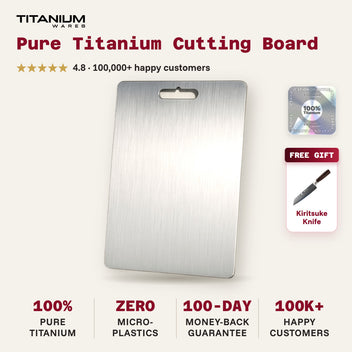
A pure titanium cutting board that never soaks up juices, stains or smells. Rinses clean or goes in the dis...
Cutting Board Materials Compared
Here's a quick side-by-side look at the most common cutting board materials:
|
Material |
Surface |
Weight |
Maintenance |
Durability |
Dishwasher-Safe |
Best For |
|
Hardwood |
Porous |
Moderate to heavy |
Regular oiling, hand wash |
High with care |
No |
Everyday chopping, serving |
|
Bamboo |
Porous |
Light |
Occasional oiling, hand wash |
Moderate |
No |
Light prep, budget buyers |
|
Plastic |
Non-porous when new; grooves with use |
Light |
Easy wash, replace often |
Low to moderate |
Often |
Color-coded prep, raw meat |
|
Rubber |
Non-porous |
Heavy |
Hand wash, occasional sanding |
High |
Usually no |
Preccision knife work |
|
Composite |
Low porosity |
Light |
Very low |
High |
Often |
Low-fuss everyday use |
|
Titanium |
Non-porous |
Light |
Soap and water, no oiling |
Very high |
Yes |
Raw proteins, strong flavors, low-maintenance kitchens |
|
Stainless steel |
Non-porous |
Heavy |
Soap and water |
Very high |
Yes |
Dough, commercial prep |
|
Glass, marble, granite |
Non-porous |
Heavy |
Minimal |
High, but can chip |
Glass often; stone usually no |
Serving, pastry, cheese |
The table gives you the big picture. The sections below explain what each rating means in daily use.
Every Cutting Board Material Explained
Hardwood (Maple, Walnut, Cherry)
Hardwood is the classic choice, and for good reason. Closed-grain woods like maple, walnut, and cherry have a fine texture that holds up well and gives a pleasant, slightly cushioned feel under a blade.
End Grain vs Edge Grain
End-grain boards are built with the wood fibers pointing up, like a checkerboard. The blade slips between the fibers, which makes end grain especially forgiving on knife edges. These boards are thicker, heavier, and more expensive.
Edge-grain boards use long strips laid side by side. They're more affordable and dimensionally stable, though knife marks show more readily.
Pros, Cons and Best For
Pros: Knife-friendly surface, attractive look, long life with good care.
Cons: Porous, needs monthly oiling, must be hand-washed and dried promptly, can warp or crack if soaked.
Best for: Cooks who enjoy board maintenance and do a lot of vegetable prep.
Bamboo
Technically a grass, bamboo is fast-growing and widely seen as an eco-friendly option. Most bamboo boards are made from strips pressed and glued together.
Pros, Cons and Best For
Pros: Affordable, lightweight, renewable.
Cons: Harder than maple, so it's less forgiving on edges. The glued layers can loosen with moisture, and it needs occasional oiling.
Best for: Budget-conscious cooks and light, everyday tasks.
Plastic (HDPE and Polypropylene)
Plastic cutting boards, usually high-density polyethylene (HDPE) or polypropylene, are the workhorses of many home and commercial kitchens.
Pros, Cons and Best For
Pros: Inexpensive, light, often dishwasher-safe, and easy to color-code for raw meat versus produce.
Cons: Knife grooves build up quickly and trap residue, so boards need regular replacement. A 2023 study in Environmental Science & Technology also found that chopping on polyethylene and polypropylene boards releases microplastics.
Best for: Separate raw-meat boards and kitchens that rely on color-coding.
Rubber
Synthetic rubber boards are a favorite in many Japanese restaurant kitchens and among serious knife enthusiasts.
Pros, Cons and Best For
Pros: Very knife-friendly, grippy on the counter, and resistant to moisture absorption. Worn surfaces can be sanded smooth.
Cons: Heavy, pricey, prone to staining, and often not dishwasher-safe.
Best for: Precision slicing with fine Japanese knives.
Composite (Wood Fiber and Paper)
Composite boards combine wood fiber or paper with food-safe resin, pressed into a dense, thin sheet.
Pros, Cons and Best For
Pros: Low porosity, thin and light, often dishwasher-safe, and heat-resistant enough to double as a trivet.
Cons: The hard surface is less forgiving on knife edges than wood, and the cutting feel is firm and a bit noisy.
Best for: Busy cooks who want an easy-care board.
Titanium
100% Pure Titanium Cutting Boards are one of the newer materials in home kitchens, and they solve several problems that come with wood and plastic.
A solid titanium surface is non-porous, so raw meat juices, garlic, and beet stains sit on top instead of soaking in. A quick wash with soap and water is usually all it takes. There’s no oiling schedule, and the board won’t swell or warp after washing. Titanium is also highly corrosion-resistant, so it won’t rust. With a density of about 4.5 g/cm³, compared with roughly 7.9 g/cm³ for stainless steel, it’s far lighter than other metal boards.

Titanium cutting boards offer a non-porous, corrosion-resistant, plastic-free cutting surface that requires no oiling and is easy to maintain.
Pros, Cons and Best For
Pros: Non-porous, rust- and corrosion-resistant, low maintenance, lightweight for a metal board, often dishwasher-safe, and plastic-free when made from solid, uncoated titanium.
Cons: It costs more upfront than plastic or bamboo, though one durable board can replace several cheaper ones over time. Quality also varies between sellers, so choose a board that states its titanium grade and confirms solid, uncoated construction.
Best for: Everyday prep, raw meat and fish, strong-smelling ingredients, and anyone who wants a long-lasting, low-fuss, plastic-free cutting surface.
Stainless Steel
Stainless steel is common in commercial food prep and pastry work.
Pros, Cons and Best For
Pros: Non-porous, very durable, easy to clean, dishwasher-safe.
Cons: Heavy and noticeably heavier than titanium cutting boards, making it less convenient to lift, move, and store.
Best for: Rolling dough and commercial prep stations.

Comparison of the Average Weight of Titanium and Stainless Steel Cutting Boards
Glass, Marble and Granite
These boards look elegant, but they're better at presentation than prep.
Pros, Cons and Best For
Pros: Non-porous, easy to wipe clean, and beautiful on the table. Marble stays cool, which helps with pastry.
Cons: These surfaces are harder than knife steel and can chip blades quickly. They're also slippery, and acidic foods can etch marble.
Best for: Serving cheese, charcuterie, and pastry work, not daily chopping.
What Is the Healthiest Cutting Board Material?
The healthiest cutting board is one that's easy to clean thoroughly and kept in good condition. Material matters, but habits matter just as much.
Porous surfaces like wood and bamboo need prompt drying and regular care to stay hygienic. Plastic boards are non-porous when new, but deep knife grooves can trap residue, and plastic surfaces can shed microplastics during chopping.
Non-porous materials make cleaning simpler because food residue stays on the surface. Solid titanium stands out here because it pairs a non-porous surface with no plastic, which appeals to health-conscious cooks.
Whatever you choose, follow USDA guidance: wash boards in hot, soapy water after each use, use separate boards for raw proteins and ready-to-eat foods, and replace any board that's cracked or deeply grooved.
How to Choose the Right Cutting Board Material for You
Start with a few honest questions:
-
What do you cut most often? Lots of raw meat and fish calls for a non-porous surface. Mostly vegetables? Wood or rubber may suit you.
-
How much upkeep will you actually do? If monthly oiling sounds like a chore, skip wood and bamboo.
-
Do you want dishwasher convenience? Plastic, composite, stainless steel, and many titanium boards qualify.
-
Are you trying to cut down on plastic? Wood, stone, and solid titanium all offer plastic-free surfaces. Wood needs regular oiling and stays porous, while stone can quickly dull your knives. Titanium is the option that pairs a plastic-free surface with a non-porous finish and minimal upkeep.
-
Are you thinking long term? Cheap boards add up when you replace them every year.
For many home cooks, the right cutting board material comes down to low maintenance and long life. That's the gap titanium fills. The Titanium Wares 100% Pure Titanium Cutting Board is made from solid, commercially pure Grade 1 titanium, lab-verified at 99.96% purity and SGS-tested, with no plastic or coating on the cutting surface. It comes in three sizes to fit different counters.
Conclusion
The best cutting board material is the one that fits how you cook. Wood and rubber reward cooks who love knife work and don't mind upkeep. Plastic works for budget color-coding. If you want a durable, non-porous board that cleans up fast and never needs oiling, titanium is well worth a closer look.
For more helpful kitchen tips, follow us on Facebook and Instagram! If you have any questions about Titanium Wares products or promotions, contact us anytime at support@titaniumwares.com. Our 24/7 team is always happy to help.
FAQs
What Is the Best Cutting Board Material for Everyday Use?
It depends on your priorities. Hardwood offers a forgiving feel for vegetable prep, while titanium suits cooks who want a non-porous, low-maintenance board for daily use.
Is Titanium a Good Cutting Board Material?
Yes. Solid titanium is non-porous, corrosion-resistant, and lightweight for a metal board. It needs no oiling, which makes it a practical, long-lasting choice.
Which Cutting Board Material Is the Most Hygienic?
Non-porous surfaces such as titanium, stainless steel, and glass are the easiest to clean thoroughly. Regular washing and replacing damaged boards matter just as much as the material.
Is Wood or Plastic Better for Raw Meat?
Many cooks use plastic for raw meat because it's dishwasher-safe and easy to color-code. Non-porous titanium is a longer-lasting alternative that doesn't develop deep grooves the way plastic does.
How Often Should You Replace a Cutting Board?
Replace any board with deep grooves, cracks, warping, or odors that won't wash out. Plastic boards typically need replacing most often.

