 Cutting Board
 Frying Pan Pro
 Double-Sided Board


Raw chicken, steak, and fish can leave bacteria on every surface they touch. If that board then handles salad greens or sliced bread, those germs go straight onto food that will never be cooked. That’s why choosing the best cutting board for meat matters more than most cooks realize. In this guide, Titanium Wares compares five popular materials, explains what to look for, and shows you how to keep a meat board clean after every use.
In this article
Key Takeaways
-
The USDA recommends keeping one board for raw meat, poultry, and seafood and another for produce and bread.
-
A non-porous, easy-to-sanitize surface is the most important feature in the best cutting board for meat.
-
Titanium Wares 100% Pure Titanium Cutting Board is non-porous surface keeps meat juices and odors from soaking in and needs no regular oiling.
-
Wood, rubber, plastic, and bamboo can all be safe cutting boards for meat but have to cleaned, dried, and replaced properly.
-
After raw meat, remove residue, wash with hot soapy water, sanitize when needed, and dry the board completely.
Why You Need a Separate Cutting Board for Raw Meat
A dedicated meat board is one of the simplest ways to keep a home kitchen safer. Here's why it's worth the extra space on your counter.
Cross-Contamination
Raw chicken, beef, pork, and seafood can carry harmful bacteria such as Salmonella and E. coli. When the same board is used for raw meat and then for vegetables, fruit, or cooked food, those bacteria can move onto foods that won't be heated again.
The USDA Food Safety and Inspection Service recommends using one cutting board for fresh produce and bread and a separate one for raw meat, poultry, and seafood.

Using separate cutting surfaces for raw meat and ready-to-eat foods helps reduce the risk of cross-contamination during meal preparation.
Scratches and Food Residue
Every knife stroke leaves a mark. Over time, those marks can trap tiny bits of food and moisture. On boards with deep grooves, especially heavily used plastic boards, residue is harder to scrub out completely.
Separate Boards Make Food Prep Easier
Two boards also simplify your workflow. You can prep meat on one and vegetables on the other without stopping to wash in between. Color, size, or material differences make it easy to tell them apart at a glance.
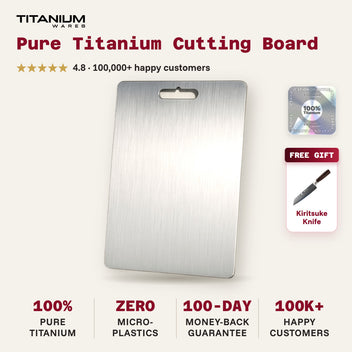
A pure titanium cutting board that never soaks up juices, stains or smells. Rinses clean or goes in the dis...
What to Look For in a Cutting Board for Meat
A good meat board balances hygiene, safety, and comfort. These five features matter most.
Non-Porous, Easy-to-Sanitize Surface
This is the most important factor. A non-porous surface limits how much meat juice, moisture, and odor can soak into the board, so it rinses clean more easily after raw prep.
Non-porous doesn't mean self-cleaning. Any board still needs proper washing and, when needed, sanitizing.
Pure titanium fits this need well. It's non-porous, uses no applied coating, doesn't readily absorb food liquids or odors, and cleans up with soap and water.
Size and Thickness
Choose a board large enough for the biggest cut you prepare, whether that's a whole chicken, a thick steak, or a fish fillet. A board that's too small pushes meat juices onto the countertop.
Thickness affects how solid the board feels. Thicker boards tend to feel steadier, while thinner ones are lighter and easier to store.
Juice Groove
A juice groove catches liquid when you carve roast beef, steak, or poultry, keeping your counter cleaner.
It's a convenience feature, not a hygiene requirement. If you mostly cut well-drained meat, a flat board works just as well.
Stability and Non-Slip Feet
A board that slides is a safety risk, especially with a sharp knife or a large cut of meat. Non-slip feet help, and so does a damp towel or a thin non-slip mat placed underneath.
5 Best Cutting Boards for Meat, Ranked
We ranked these materials by how well they handle raw meat: hygiene, resistance to liquid absorption, and ease of upkeep. Each one has its place in the kitchen.
1. Titanium Cutting Board
Titanium Wares tops this list because titanium solves the biggest problems of raw meat prep. The non-porous surface doesn’t soak up meat juices, odors, or moisture. There is no plastic and no applied coating on the cutting surface. It won’t crack, warp, or rot from water exposure, so one board can go from raw chicken to fish to vegetables after a quick wash.
Titanium Wares offers two options:
-
Pure Titanium Cutting Board: 100% Grade 1 titanium, SGS-tested, dishwasher-safe, and never needs oiling. The Large size (18" × 11.8") gives plenty of room for roasts and larger cuts.
-
Double-Sided Titanium Cutting Board: A Grade 1 titanium side for raw meat and seafood, plus a wheat-fiber side for produce and bread. It adds a juice groove and non-slip feet, so one board keeps raw and ready-to-eat foods apart.

Two dedicated prep surfaces in one board: Grade 1 titanium for raw meat and seafood, and wheat-fiber composite for fruits, vegetables, and bread.
Choose the Pure Titanium board if you want a dedicated meat board that goes straight into the dishwasher. Choose the Double-Sided board if you want raw and fresh prep covered by a single board.
2. OXO Good Grips Plastic Cutting Board
Plastic is the most common choice because it is light, affordable, and usually dishwasher-safe.
OXO is one of the best-known brands in this category. The catch is wear. Knife grooves build up over time, trap food residue, and make the board harder to clean. Scratched plastic can also shed tiny particles while you cut.
Learn more in our guide: are plastic cutting boards safe. Replace a plastic board once it is cracked or heavily scored.
3. John Boos Maple Cutting Board
John Boos is a classic name in hardwood boards. Maple is gentle on knife edges and attractive enough to serve on.
Cutting raw meat on wood isn’t automatically unsafe, but it takes more work. You have to wash and dry the board thoroughly, oil it regularly, and never soak it or leave it damp.
As knife marks deepen, they become harder to clean, which raises the risk of cross-contamination.
4. NoTrax Sani-Tuff Rubber Cutting Board
Sani-Tuff boards are a favorite in many professional kitchens. Rubber gives slightly under the blade, so it is comfortable to cut on and kind to knives.
On the downside, these boards are heavy, priced at the higher end, and need to be hand-washed, which makes them harder to manage in a home kitchen.
5. Totally Bamboo Cutting Board
Totally Bamboo is a popular brand for bamboo boards, which are lightweight, plant-based, and harder than many softwoods. Like wood, bamboo needs occasional oiling and careful drying, and it shouldn’t sit in water.
Most bamboo boards are made from strips bonded with adhesive, so check what glue the manufacturer uses before you buy.
Which One Is the Best Cutting Board for Meat?
For most home kitchens, the best cutting board for meat is the Titanium Wares 100% Pure Titanium Cutting Board. It is made from solid Grade 1 titanium with no coating. Its non-porous surface keeps raw chicken, steak, and fish juices on top instead of letting them soak in, and it goes straight into the dishwasher after use. If you want raw meat and ready-to-eat foods kept apart on one board, the Titanium Wares Double-Sided Titanium Cutting Board is the best choice.
Other materials still have their place. Use this quick guide to match a board to your needs:
| Your Priority | Best Fit | Our Pick |
|---|---|---|
| Easy cleaning, low maintenance | Titanium | Titanium Wares 100% Pure Titanium Cutting Board |
| Separate raw and fresh prep surfaces | Double-sided titanium | Titanium Wares Double-Sided Titanium Cutting Board |
| Gentle on knives | Wood, double-sided titanium | Titanium Wares Double-Sided Titanium Cutting Board or John Boos Maple |
| Professional cutting feel | Rubber | NoTrax Sani-Tuff |
| Budget-friendly | Plastic | Any NSF-certified plastic board |
| Lightweight, plant-based | Bamboo | Any solid bamboo board |
No single board is perfect for every kitchen. But if you want a non-porous surface that rinses clean, doesn't hold meat juices, and never needs oiling, titanium or the double-sided titanium board is well worth considering.
Is It Safe to Cut Raw Meat on a Cutting Board?
Yes. It is safe to cut raw meat on a cutting board as long as the board is made from a suitable food-contact material and is properly cleaned and sanitized after use.
Safe cutting boards for meat share a few habits, whatever the material:
-
Keep raw and ready-to-eat foods apart: No cleaning routine removes every bacterium. Never move from raw meat to salad, fruit, or cooked food on the same board until it has been washed and sanitized.
-
Clean after every use: Don't let meat juices sit on the surface or dry on the board.
-
Watch for wear: Replace any board with deep, hard-to-clean grooves or cracks.
What about raw meat on a wood cutting board? It's fine, provided the wood is in good condition, dried thoroughly, and oiled regularly. Plastic, rubber, and bamboo follow the same rule: proper cleaning matters more than the material alone.
Non-porous surfaces simply make that routine faster, because juices stay on top and rinse away.
How to Clean a Cutting Board After Raw Meat
A consistent cleaning routine keeps any meat board safe to reuse. Follow these four steps after every raw prep session.
-
Remove food residue: Scrape off scraps of meat, fat, and pooled liquid. Keep the dripping board away from other dishes and surfaces.
-
Wash with hot, soapy water: Scrub both sides and all edges with dish soap. Pay extra attention to knife marks and any spot where residue collects.
-
Sanitize when needed: Use a sanitizer approved for food-contact surfaces. Follow the concentration and contact time on the product label or from food safety authorities. The USDA suggests a solution of 1 tablespoon of unscented liquid chlorine bleach per gallon of water.
-
Dry completely: Let the board air-dry or towel-dry it before storing. This step matters most for wood and bamboo, which can crack or warp if left damp.
Titanium makes this routine noticeably simpler. Both the Grade 1 titanium cutting board and the double-sided titanium cutting board wash clean with warm water and dish soap or go straight into the dishwasher, with no oiling afterward. For a full routine, see our guide on how to clean a titanium cutting board.
Conclusion
A separate board for raw meat is one of the easiest ways to prevent cross-contamination at home. The best cutting board for meat depends on your priorities, whether that's budget, knife care, or cutting feel.
If you're looking for a cleaner and simpler way to prepare food every day, the Titanium Wares Pure Titanium Cutting Board, along with its convenient double-sided version, is just what you need.
For more helpful kitchen tips, follow us on Facebook and Instagram! If you have any questions about Titanium Wares products or promotions, contact us anytime at support@titaniumwares.com. Our 24/7 team is always happy to help.
FAQs
What color cutting board is used for raw meat?
Red is the most common color for raw meat in color-coded kitchen systems, with yellow often used for raw poultry and green for fruits and vegetables. The catch is that everyone has to remember the code, and most colored boards are plastic. A Titanium Cutting Board makes it simpler: the titanium side is for raw meat and seafood, and the wheat-fiber side is for produce and bread. No color chart to memorize and nothing to mix up.
Can I use the same cutting board for raw meat and cooked food?
Only after washing it with hot, soapy water and sanitizing it. Even then, separate surfaces are safer and faster. If you’d rather not juggle two boards, a Double-Sided Titanium Cutting Board gives you both in one: the titanium side handles raw meat and seafood, while the wheat-fiber side stays reserved for cooked food, produce, and bread. Just flip it over instead of stopping mid-prep to scrub, then wash the whole board when you’re done.
How often should I replace a cutting board for meat?
Replace plastic, wood, or bamboo boards once they develop deep grooves, cracks, or warping that make cleaning difficult. A titanium board doesn't rust, warp, or need resurfacing, so with normal care it is built for many years of daily use.
Is a titanium cutting board good for raw meat?
Yes. Titanium is non-porous, so raw meat juices and odors stay on the surface instead of soaking in. After use, wash it with warm water and dish soap or place it in the dishwasher. It needs no oiling or special treatment between uses.
Should a cutting board for meat be dishwasher-safe?
It isn't required, but it makes cleaning after raw meat much easier. Plastic and titanium boards are often dishwasher-safe. Wood and bamboo boards should be hand-washed, since the heat and moisture of a dishwasher can cause cracking or warping.

