 Cutting Board
 Frying Pan Pro
 Double-Sided Board


Raw chicken, fresh fish, then a quick pile of salad greens: your cutting board often handles it all within the same hour, which is why a dishwasher safe cutting board can make everyday kitchen hygiene simpler. But not every board survives the dishwasher. High heat, harsh detergents, and long wet cycles can warp, crack, or wear down some materials. In this guide, Titanium Wares explains which cutting boards are dishwasher-safe and stay hygienic for years, how each material compares, and what to look for before you buy.
In this article
Key Takeaways
- Dishwasher-safe and easy to clean are not the same thing, so always check the manufacturer’s care instructions.
- Titanium, stainless steel, and glass are commonly dishwasher-safe, while plastic and composite boards vary by product.
- The most hygienic dishwasher safe cutting boards pair a non-porous surface with low maintenance and long-term durability, and the Titanium Wares Pure Titanium Cutting Board, made from 100% Grade 1 titanium, has all three.
- Wood and bamboo boards can still be safe when washed by hand, dried well, and oiled when needed.
- A dishwasher supports hygiene, but proper loading, full drying, and good storage matter just as much.
Why Dishwasher-Safe Matters for Hygiene
A cutting board touches more raw food than almost any other kitchen tool. Juices from meat, poultry, and seafood can linger on the surface if the board isn't cleaned thoroughly after each use.
A dishwasher helps by combining hot water, detergent, and a consistent wash cycle. That routine removes food residue more reliably than a quick rinse, which helps reduce the risk of cross-contamination between raw and ready-to-eat foods.
Results still depend on the machine, the cycle you choose, and how the board is loaded. A dishwasher is a strong cleaning tool.
It also helps to separate two ideas:
-
Easy to clean: the surface rinses off quickly by hand.
-
Dishwasher-safe: the material handles high heat and long wet cycles without warping, cracking, or breaking down.
A board can be easy to clean by hand yet still struggle in a dishwasher. When both qualities come together, keeping your board clean every day becomes far less of a chore.
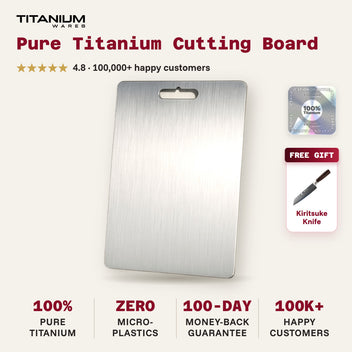
A pure titanium cutting board that never soaks up juices, stains or smells. Rinses clean or goes in the dis...
Which Cutting Boards Are Dishwasher Safe?
Titanium, stainless steel, and glass are generally dishwasher-safe. Plastic and composite boards depend on the specific product, while most natural wood and bamboo boards should be washed by hand.
|
Material |
Dishwasher-safe? |
What to know |
|
Titanium |
Yes |
Corrosion-resistant; no oiling or surface treatment needed |
|
Stainless steel |
Usually |
Check the construction and product care guide |
|
Composite (wood fiber) |
Depends on the product |
Varies with how it's made and its heat tolerance |
|
Plastic (HDPE, PP) |
Depends on the product |
Look for a clear dishwasher-safe label |
|
Glass |
Usually |
Handle with care to avoid chips or cracks |
A few points are worth keeping in mind:
-
Material alone isn't the whole story. Two plastic or composite boards can handle heat very differently, depending on thickness, density, and how they're built.
-
The manufacturer has the final word. Check the care label or product page before loading any board into the dishwasher.
-
Natural wood is the usual exception. Most wood and bamboo boards are meant for hand washing and careful drying.
If you want cutting boards dishwasher safe by design, start with materials that tolerate heat and moisture without needing extra care afterward.
Which Dishwasher-Safe Cutting Board Is Most Hygienic?
Surviving the dishwasher is only the starting point. A truly hygienic board also resists absorbing liquids, has a non-porous surface, cleans up fully after raw food, holds up against corrosion, and doesn't demand constant upkeep. Here's how each material measures up.
 Plastic and titanium cutting boards offer different material properties, maintenance requirements, and long-term cleaning considerations.
Titanium
Titanium stands out because it checks every box at once. Its non-porous surface doesn't soak up water, meat juices, or food odors, so residue stays on top where soap and water can reach it.
It's also highly corrosion-resistant. There's no oiling, sealing, or regular surface treatment to keep up with, and it can go in the dishwasher according to the care instructions.
That makes it easy to move from raw chicken to fresh herbs with a quick, thorough clean in between. The 100% Pure Titanium Cutting Board from Titanium Wares is made from 100% Grade 1 titanium, giving you a plastic-free, uncoated surface built for everyday prep.
Stainless Steel
Stainless steel offers a non-porous, corrosion-resistant surface that's easy to wipe clean. Most well-made steel boards can go in the dishwasher, and they're a solid plastic-free option for busy kitchens.
The trade-offs are mostly about feel. Steel is usually heavier than titanium, which makes lifting and moving the board less convenient.
Composite (Wood Fiber)
Composite boards are made from wood fibers pressed together under high heat and pressure. The result is a dense, fairly durable surface that cleans up more easily than traditional wood.
Some composite boards are rated for the dishwasher, but heat tolerance varies widely between brands. Always check the manufacturer's guidance before running one through a hot cycle.
Bamboo boards deserve extra attention here. Most are made from bamboo strips bonded together with adhesives. Low-quality glues may break down under high heat and raise health concerns, so be cautious with bamboo boards whose materials haven't been verified by the manufacturer.
Plastic (HDPE and PP)
HDPE and PP boards are lightweight, affordable, and found in most kitchens. Many are labeled dishwasher-safe, but not all of them are, especially boards without clear testing or care information. Check the manufacturer's instructions first.
Keep an eye on the surface over time. Deep knife grooves are harder to clean thoroughly, and a growing body of research shows that cutting on plastic boards can release microplastics into food. Replace the board once deep cuts appear. Learn more in our guide: Are Plastic Cutting Boards Safe? Microplastics and Plastic-Free Alternatives.
Glass
Glass is non-porous, doesn't absorb liquids, and wipes clean easily. Most glass boards can go in the dishwasher if the manufacturer allows it.
Its main limitations are practical. The surface is very hard on knife edges, and glass can chip or crack if it's dropped or knocked against a counter.
Antibacterial and Antimicrobial Cutting Boards: Do They Work?
These labels can help, but they don't replace proper cleaning. Knowing what each term means makes it easier to judge what you're actually buying.
-
Antibacterial: a material or treatment designed to slow the growth of bacteria or kill them.
-
Antimicrobial: a broader term covering resistance to a wider range of microorganisms, including bacteria, mold, and some fungi.
On cutting boards, these properties usually come from additives mixed into plastic or coatings applied to the surface. How well they work depends on the specific treatment, how it was tested, and how long it lasts with daily use and repeated washing.
There's also an important difference between a surface that fights microbes and a surface that's easy to clean. A treated board still collects food residue, and that residue still needs to be washed away.
For most home cooks, the more reliable approach is simple: choose a non-porous surface that doesn't hold onto liquids, then clean it thoroughly after every use. An uncoated material like pure titanium fits that approach well, since its hygiene doesn't depend on a treatment that could wear off over time.
Are Wood and Bamboo Cutting Boards Safe if You Can't Dishwash Them?
Wood and bamboo cutting boards can be safe to use, as long as they're cleaned and cared for properly.
They simply aren't built for the dishwasher. High heat and long exposure to moisture can cause wood and bamboo to swell, warp, split, or crack. Once that happens, the surface becomes harder to clean and the board wears out sooner.
A simple hand-washing routine keeps them in good shape:
-
Wash with warm water and dish soap right after use.
-
Scrub well, paying attention to knife marks.
-
Rinse, then dry immediately with a clean towel.
-
Stand the board upright in a well-ventilated spot so both sides air-dry.
Many wood boards also benefit from occasional oiling with food-grade mineral oil. It helps limit moisture absorption and reduces the risk of cracking.
If you prefer a board that skips the hand-washing and oiling routine, a dishwasher-safe material may suit your kitchen better.
How to Wash a Cutting Board in the Dishwasher

Proper dishwasher loading helps ensure cutting boards are thoroughly cleaned while keeping the spray arms unobstructed
A dishwasher does most of the work, but a few simple habits make the clean far more effective.
-
Check the care instructions. Confirm the board is labeled dishwasher-safe before you load it.
-
Scrape off food first. Remove leftover scraps, fat, and bits of skin so the cycle can reach the whole surface.
-
Load it in the right spot. Place the board along the side or back of the bottom rack, where it won't block the spray arms.
-
Use dishwasher detergent. Stick to detergent made for dishwashers rather than hand dish soap, which can cause excess suds.
-
Pick a suitable cycle. Choose a cycle that matches the material and the manufacturer's guidance. Some materials handle high-heat settings better than others.
-
Dry it completely. Let the board dry fully, either in the machine or on a rack, before storing it.
Keep in mind that hygiene is a routine, not a single step. Cleaning, drying, and storing the board in a clean, dry place all work together. Simply putting a board in the dishwasher won't guarantee it's hygienic in every situation.
How to Choose a Dishwasher-Safe Cutting Board
The right board fits both your hygiene standards and the way you actually cook. Use these five criteria to narrow your options.
-
Dishwasher compatibility: Look for a clear dishwasher-safe rating from the manufacturer, not just a claim that the board is easy to clean.
-
Non-porous surface: A surface that doesn't absorb water, juices, or odors is easier to clean thoroughly after raw meat and fish.
-
Durability: Choose a material that resists corrosion, warping, and cracking, so it stays in good condition through years of washing.
-
Maintenance: Consider how much ongoing care you're willing to give. Some boards need regular oiling, while others need little more than soap and water.
-
Food preparation needs: Think about what you cut most often and how frequently you cook. A board used several times a day should handle repeated cleaning with ease.
If you rely on your dishwasher often and want a board that doesn't need complicated upkeep, titanium is one of the most practical materials to consider.
Titanium Wares – The Best Dishwasher-Safe Cutting Board
Titanium Wares makes titanium kitchenware for people who want tools that are simple, durable, and easy to live with. Its pure titanium cutting board is built for cooks who want a plastic-free surface that stays easy to clean, day after day.
Here's what that means in your kitchen:
-
Dishwasher-safe and easy to clean: Load it into the dishwasher per the care instructions, or wash it quickly with soap and water.
-
100% pure Grade 1 titanium: SGS testing confirms 99.96% purity, so you know exactly what touches your food.
-
Non-porous and uncoated: The surface doesn't absorb liquids or odors, and there's no applied coating to wear away.
-
Low maintenance: No regular oiling or special treatment, unlike many wood boards.
-
Lighter than stainless steel: Titanium is about 40% less dense than steel, so the board is easier to lift, rinse, and load.
-
No plastic, no glue: Unlike plastic boards, it sheds no plastic particles. Unlike bamboo or composite boards, its cutting surface needs no adhesives that face hot dishwasher cycles.
If you want a board that fits naturally into a dishwasher-friendly routine, take a closer look at the Grade 1 titanium cutting board by Titanium Wares. It's a simpler approach to everyday food preparation.
Conclusion
So, which dishwasher safe cutting board is most hygienic? Look for one that combines a clear dishwasher-safe rating, a non-porous surface, long-term durability, and minimal maintenance. Titanium, stainless steel, and glass all handle the dishwasher well, while plastic and composite boards depend on the specific product. Of these, titanium is the one that meets all four standards. For a board that stays hygienic through years of dishwasher cycles, the Titanium Wares Pure Titanium Cutting Board is a reliable choice. If you also want a separate surface for produce and bread, go with the Double-Sided Titanium Cutting Board.
For more helpful kitchen tips, follow us on Facebook and Instagram! If you have any questions about Titanium Wares products or promotions, contact us anytime at support@titaniumwares.com. Our 24/7 team is always happy to help.
FAQs
Are plastic cutting boards dishwasher safe?
Some are, but not all. Check for a clear dishwasher-safe label from the manufacturer.
Can you put a wooden cutting board in the dishwasher?
It's best not to. Heat and moisture can warp or crack wood, so wash it by hand instead.
Does a dishwasher sanitize a cutting board?
It cleans effectively with hot water and detergent, but results vary by machine and cycle.
Is a titanium cutting board dishwasher safe?
Yes. Titanium Wares' board can go in the dishwasher according to its care instructions.
How often should I replace a cutting board?
Replace plastic or wood boards once deep grooves or cracks make them hard to clean.

